
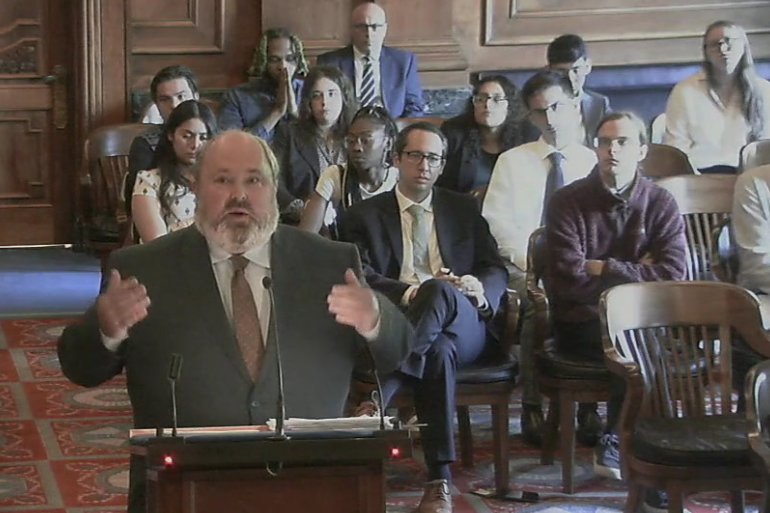
The Illinois State Police are resisting release of internal communications about one man’s denied FOID card, even though those are public records. The Illinois Supreme Court heard oral arguments in Hart v. Illinois State Police. This is another Thomas Maag case, and Mr. Maag is proving himself a very capable Second Amendment litigator.
You can download the entire audio and/or video of the case here.
And Greg Bishop has more at The Center Square:
(The Center Square) – The intersection of Illinois’ Firearm Owner’s Identification card and the Freedom of Information Act was the focus of an Illinois Supreme Court case heard this week.
The case stems from two people requesting public records regarding why their FOID cards, a state-issued identification required in Illinois to own or buy firearms and ammunition, were either revoked or suspended. The plaintiffs’ FOIA requests to Illinois State Police were denied. After challenges, the case made it to the Illinois Supreme Court on Tuesday…
Representing the plaintiffs, attorney Thomas Maag said going through the FSB isn’t conducive.
“They don’t answer the telephone for hours at a time. They don’t answer emails for days and or weeks at a time,” Maag said. “I invite this court to go to their website and dial the telephone number and see how many hours it takes to get a person, if you even can.”
This is a feature of an Illinois State Police under Governor Jelly Beans, not a bug.
They’re not a third party seeking their own address or other personal information, Maag said.
“They do want to be told what the stated reason they’re not being allowed to have a FOID card and thus exercise their Second Amendment rights is so that they can determine whether or not they can challenge that or not,” Maag said.
Practically speaking, given that this Illinois Supreme Court is the best Gov. Pritzker’s money can buy, don’t get your hopes up that the ISP will be required to actually provide some customer service to gun owners… and to reveal their internal communications about denying people a fundamental constitutional right.
Comments are closed.