
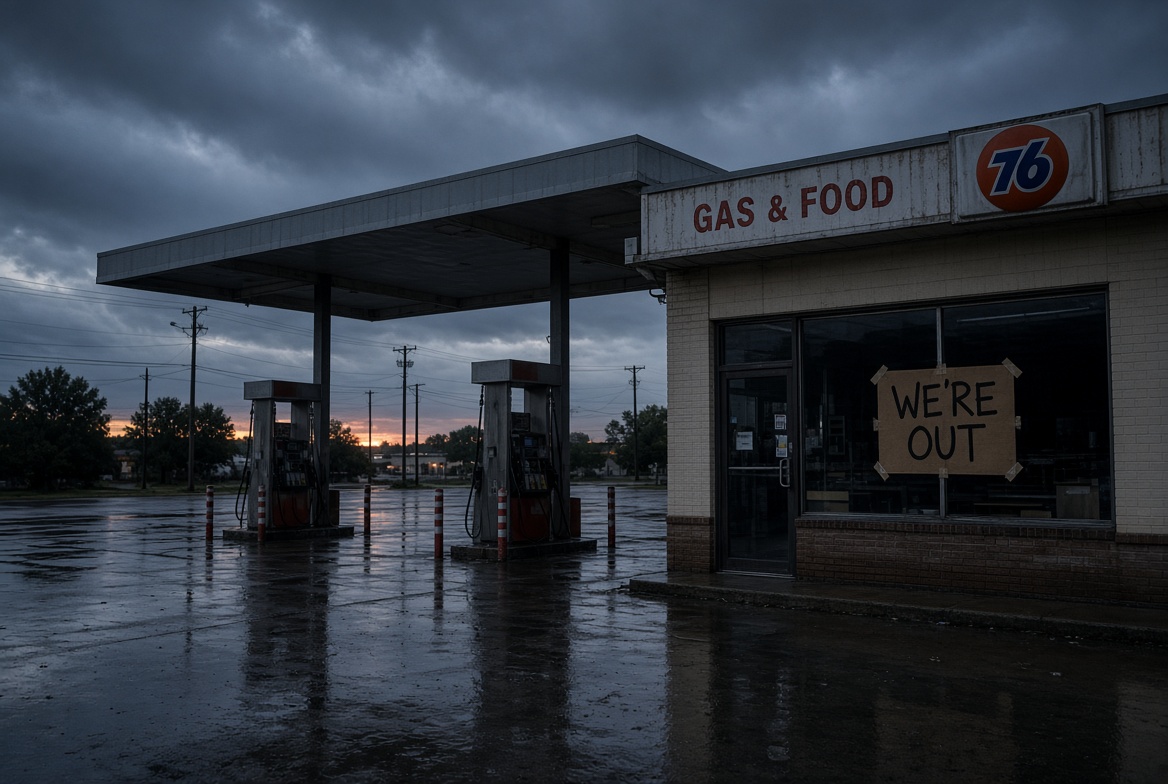
Gasoline is the quiet part of preparedness that people skip until the pumps go dark and every station is either dead without power or has a handwritten “NO GAS” sign taped to the glass.
Food and water keep you alive. Liquid gold keeps you mobile, the freezer cold, the basement dry, and the saw running when a tree is across the drive. It is also one of the few barter items that needs no sales pitch. When the lights are out, nobody gives a hoot about Venmo. Especially if the internet is down.
Ten to twenty gallons is not a bunker fantasy. It is a working stash. A portable generator under a real load can burn half a gallon to a gallon an hour. Run it in stretches — freezer, sump pump, a few lights, phones on the charger — and twenty gallons is a week or more of critical power, not an afternoon of running everything at once. Ten gallons in an ordinary car is often 200 miles or better. That is enough to get a family out of a flooded neighborhood, or any other disaster area, and to friends or relatives who still have normalcy.
A chainsaw does not need much, but it needs some, and the crew with the county truck may already be swamped. The same jug that starts the saw starts the generator that keeps the sump pump ahead of the water.
Illinois has already written the lesson. Tornadoes, derechos, ice storms, and multi-day outages do not send a calendar invite. Stations can have fuel in the underground tanks and still be useless, because the pumps run on electricity. Card readers need power too. And a network. Cash helps only if someone is open and willing to sell.
The people in line six hours after a disaster kicks off are not buying preparedness. They are buying whatever is left, if anything is left, after everyone else had the same idea. The cans you filled and stabilized on a normal Tuesday do not care that the grid is down.
The trick is keeping gas from turning into varnish. Modern jugs help. They seal tight and do not weep fumes into the shed the way the old red metal cans did in the summer heat. If you hate modern nozzles — and most people do — Harbor Freight sells a battery-powered transfer pump for about fifteen dollars. The pump does the work. Spills stay small. Your driveway and shoes will not smell like a refinery.
Treat the fuel. PRI-G in a tightly sealed can will keep gasoline useful for years, not months. Figure three to five if you do it right. Hit it again about every eighteen months and you are not rolling the dice. Label the jug with the date you filled it. Untreated gas is good for about three months, and some would argue even that is optimistic.
Better still, treat winter-blend gasoline. Summer-blend production ended September 15. Give stations another few weeks to flush the summer juice out of their tanks, then buy. Winter blend has more of the volatile good stuff and is less eager to go stale in storage.
Store the cans in an unattached garage or shed. Do not put them in the house, and definitely not next to the water heater. Rotate every couple of years by running the oldest fuel through the car or the mower. The engine does not care that the gas is two years old if you treated it. You get a fresh fill, and proof the stash still works. Rotation is what keeps this from being wasted money. You are not burying fuel. You are keeping a rotating reserve, the same way you keep a rotating pantry.
What you are buying is not a hobby. It is options. Options to leave when staying put is a bad bet. Options other than sitting in a disaster line for hours to beg for ten gallons, if you are lucky. Options to run a generator after a storm so the food does not thaw and the sump pump keeps the basement dry — to say nothing of powering the cleanup. Options to fire up a chainsaw and the other recovery tools instead of waiting on a crew that may not come before the next line of storms makes it worse.
Spare fuel is a ticket, a tool, and a barter item. Treat it, date it, park it outside the living space, and stop pretending the filling stations will always be open when you need them.