
At Guns Save Life, we educate and empower people. We ask them to consider the things most people refuse to think about. Denial is easier. It costs nothing today. It also leaves practitioners empty-handed when the problem arrives.
Preparation is more than buying a gun to answer a potential threat. A firearm in the safe is inventory. A firearm you can put on a threat in seconds is readiness. Those are not the same thing.
You have guns, ammo and six months of food. You have antibiotics, a generator, and a plan for the day the grid dies and the stores stay closed for weeks. None of that is foolish. It forces you to think about water, calories, security, and medical care when the systems that normally supply them are gone for a week or three.
The gap is what happens right now.

Everyday carry is a thing.
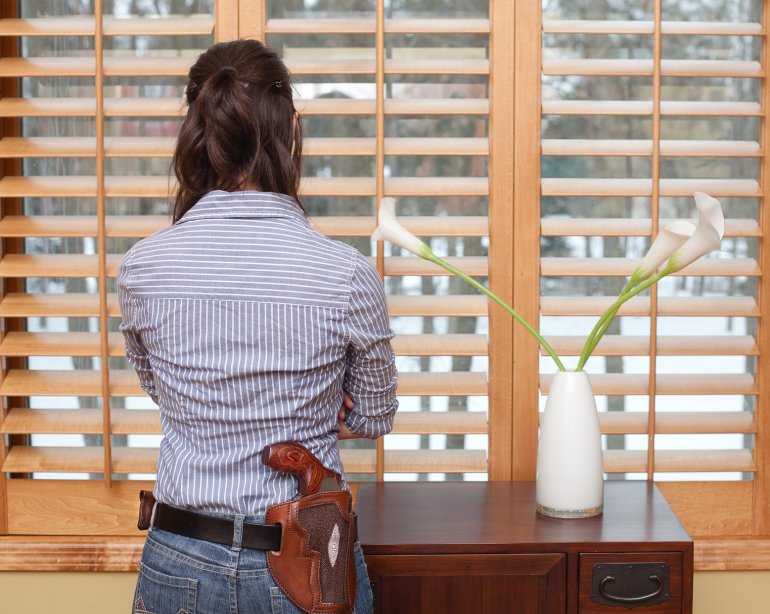
If a knife-wielding thug named Jasiyah kicks in the front door and goes after your grandchild, can you stop him right now? Or is the pistol that would matter still locked up because everyday carry felt like a statement instead of a habit?
Power fails after a storm. The generator is buried behind stored supplies and junk in the garage. Can you get it out, prepped and running before your sump pump exhausts your UPS power supply (you do have a backup power supply on your sump pump, right?) and the basement floods?
You prepared for a weeks without grocery stores yet you can’t access the power cord to your fridge, freezer or microwave to hook up an extension cord and resume some semblance of normalcy with a generator for a day or two? Or can’t start your gas range with a match? If this is you, you’re doing preparedness wrong.

There’s a generator and stored fuel in there somewhere. We promise. Is this your garage?
You have a trauma bag that looks like it belongs on a fire truck or ambulance. Yet you do not have an Israeli bandage handy after the chainsaw slips and opens your leg in the backyard.

Can you access an Israeli Battle Dressing one-handed in your home and garage to apply it?
Most people will not look at this squarely. They will buy guns, stack the ammo, med gear, comms, and all sorts of stuff and tell themselves they are ready because the receipt says so. Don’t outsource skills to a receipt. Buying a tool is not the same as having skills and experience to own the problem using those tools. And having those tools readily accessible.
Readiness is being able to act decisively in the first few seconds or minutes of a problem that did not send a calendar invite.
Everyday carry is not a costume for the range. A generator prepped and ready to go – one that you can reach in the dark – is readiness. A bandage or tourniquet you can access with one hand while bleeding or squirting is preparedness. Skills and accessibility matter more than the pile of preps.
What about the neighbor? The one you don’t even know their name. Sure, you have a post-emergency team in your head: family, close friends. Yet you do not know which neighbor has a chainsaw, a radio, medical skills or a toddler who will be screaming when the tree comes down. Or which neighbor that will be a major liability. Collapse plans are great. Real emergency response and recovery starts first with your house, then the house next door. Then your family and friends if you can get to them.
Prepare for the worst if that is what keeps you honest. Then look at the week you actually live. Storm damage. A fall off a ladder. A stranger in the house. A bad laceration. Those events do not require a bunker. They require a gun that is on you, medical gear that is not in a tote, a way to get the generator running before the basement floods, and the willingness to practice all of it before you need it.
The really bad time may never come. A bad day comes more often than we would like. Be ready for both ideally, but the more likely scenario should get most of your attention. That is what meaningful preparation looks like.