
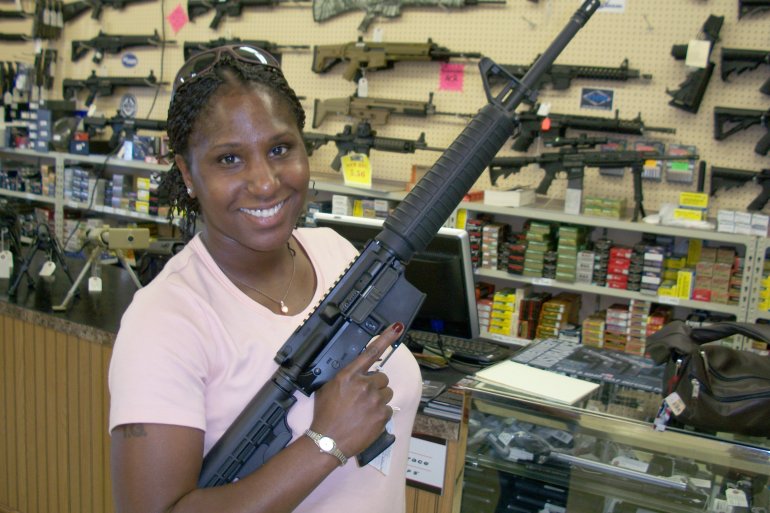
Yesterday the US Supreme Court turned away Robert Bevis’ emergency appeal asking for a preliminary injunction blocking enforcement of the PICA gun and magazine ban. Given what happened last Friday (and that was a wildly important post if you missed it), nobody was surprised by the move. In fact, last Friday was the Seventh Circuit Court of Appeals – specifically Fraudulent Frank Easterbook – trying to block any emergency action on this law from SCOTUS.
He did so by ordering a light-speed (for the courts) briefing schedule with oral arguments scheduled for about six weeks away on June 29th. Folks, that’s really fast for the federal courts, which tend to move more slowly than state courts. And to put things into context, we filed our FOID challenge in 2019 and we’re just now in court with oral arguments on June 20th of this year – four years later.
22A948 NAT. ASSN. FOR GUN RIGHTS, ET AL. V. NAPERVILLE, IL., ET AL.
The application for a writ of injunction pending appeal
presented to Justice Barrett and by her referred to the Court is
denied.
In other words, Barrett took the case before the entire court at last Thursday’s conference. Who knows what happened then, but then after last Friday’s machinations, they probably revisited this Monday and came up with this determination.
So while I had calls and texts from folks within an hour of the decision’s release, I didn’t rush out to put up a post on it. I gave it a little bit for things to flesh out. And oh boy, did they ever.
Check out this piece by a legal fellow from a woman at the Heritage Foundation on the matter. She writes an exceptional piece and I share it here with comments. Via the Daily Signal:
The Supreme Court declined to intervene Wednesday in an important Second Amendment case challenging Illinois’ new restrictions on gun owners.
But no, it’s not time to panic.
The battle isn’t over. Not even close.
We’re seeing to that.
Earlier this year, Illinois enacted a law prohibiting civilian sales or transfers of many types of commonly owned semiautomatic rifles, based solely on the state’s arbitrary determination that certain cosmetic features turn these guns into so-called assault weapons.
Illinois residents who already possess these firearms, potentially millions of people, may continue to do so under the new law—but only if they first register their ownership with the state.
And we all know what happens following registration…
Just you wait. Next January, the first piece of legislation filed by Rep. Bob Morgan will be a bill to “close the existing owner loophole” in the Illinois Assault Weapons Ban. Owners have 90 days to surrender their guns or go to prison.
They may not remove the gun from their property, except to take it to a gunsmith or gun range. And they can’t transfer the gun to any other person residing in the state. The only exception: A person may receive an otherwise banned gun as part of an inheritance.
The Illinois state government, of course, chose to exempt itself from these prohibitions. Despite calling these guns “weapons of war” that aren’t useful for self-defense, the government will continue allowing police officers to use them for, well, that very purpose: defending themselves and others against common criminal threats to civilians whom the state insists have no use for these same guns.
She forgot how the “authorities” use them to protect the booze swilling, drunk driving legislators who pass this fecal matter.

Serial, “passed out at the wheel” drunk drivers like Rep. Kam Buckner, above.
Illinois’ new law is both poor public policy and a grotesque assault on the Second Amendment rights of peaceable citizens. It unquestionably should be struck down as unconstitutional, especially in light of the Supreme Court’s 2022 decision in New York State Rifle & Pistol Association v. Bruen. In that case, the high court said that for a gun law to be constitutional, the government must demonstrate that the law is “consistent with [the] Nation’s historical tradition of firearms regulation.”
In short, the United States has absolutely no historical tradition of completely banning sales of bearable small arms that are commonly possessed by peaceable citizens for lawful purposes.
Almost immediately after Illinois Gov. JB Pritzker, a Democrat, signed the bill into law, Second Amendment groups and Illinois residents filed legal challenges in state and federal court. They also requested that these courts issue an injunction that would keep Illinois from enforcing the law while their legal challenges were pending.
Unfortunately, the lower courts declined to issue an injunction,
Uh, you got that wrong. A couple of courts declined to issue an injunction. One however got it right from the Southern District in our case.
and although the 7th U.S. Circuit Court of Appeals soon will hear the case on the merits, its timeline for review is too late to stop the law from going into effect. So, Second Amendment advocates petitioned the Supreme Court to intervene and block the law from going into effect before the 7th Circuit issues its decision.
A single rogue judge from the 7th rejected the emergency appeal. But the 7th has consolidated all of the cases from the Northern and the Southern Districts of Illinois to consider this injunctive relief appeal formally (as opposed to a single-judge emergency panel while the court is in recess).
The 7th can follow Bruen and get their heads out of their asses, or they can double down on Easterbrook stupid. If they go with Easterbrook’s version of cray-cray, then that all but guarantees the US Supreme Court will take this case to decide once and for all about gun and magazine bans.
By declining to intervene Wednesday morning, the Supreme Court didn’t make any decision about the constitutionality of the Illinois law. Instead, the high court merely allowed Illinois to begin enforcing the law’s provisions.
But it’s not. It’s complicated and I can’t blame her for not getting this exactly right as a state court has ruled the law unconstitutional and that’s why the state hasn’t begun enforcing the law’s provisions… hence why the Department of Natural Resources has published a directive letting hunters know if they used a particular gun to hunt last year, they can use it again this year, for now. Despite the law’s provisions (which have been struck by the court decision…) Until the Illinois Supreme Court reverses the Macon County ruling striking down the PICA gun and mag ban, the IDNR *can’t* enforce it or they’ll get sued to the hills, both as a department and the individual officers personally as a violation of Section 1983 of the federal code.
Yes, it’s disappointing that the law will go into effect for the time being. But this is neither a significant victory for gun control advocates nor a reason for Second Amendment advocates to be alarmed.
It’s common for the Supreme Court to refrain from intervening in these types of cases at such an early stage in the litigation process. It does so for prudent reasons that have nothing to do with how the court might ultimately consider the underlying constitutional question.
That’s an understatement. More like it effectively never happens. Maybe one in ten thousand get some sort of emergency action of this type. Maybe one in a hundred thousand.
Emergency interventions such as the one sought here require the Supreme Court to make decisions without the benefit of a robust factual record, extensive briefing from the parties, or ability to ask questions at oral argument. They also leave the court with far less time to consider important issues and reach well-reasoned decisions.
The Supreme Court has shown particular restraint when it comes to intervening in the myriad post-Bruen legal challenges under the Second Amendment that have worked their way through the lower courts over the past year.
No one knows for sure why the justices decline emergency intervention in some cases and not in others. However, one likely reason for their restraint in recent Second Amendment cases is that they’d like to give lower courts plenty of opportunity to try their hand at faithfully implementing Bruen’s framework.
And frankly, the lower courts have been, in a majority of cases, failing to faithfully follow Bruen.
Bruen was, after all, a major decision that fundamentally changed the way in which lower courts must analyze Second Amendment challenges. It’s possible that these lower courts ultimately will prove themselves capable of correctly applying Bruen, in which case the Supreme Court will have avoided unnecessary and premature intervention.
It’s possible I could be elected Governor of Illinois, too.
Even if lower courts fail to faithfully and correctly apply the Bruen framework, there is plenty of reason to believe that, in such a scenario, the Supreme Court will step in to vindicate both Bruen and the Second Amendment by striking down the Illinois law (or a similar law in a different state) as unconstitutional.
Pray for the good health of most of the SCOTUS justices.
“Good law” sometimes takes time for courts to achieve. That wait certainly can seem like an eternity for the residents whose rights are being undermined. But despite early cries of victory from gun control advocates, this latest battle for the heart of the Second Amendment is far from over.
It took two loooonnnnngggggg years for the courts to get the Brown v. Board of Education decision through their heads to end racial segregation in American schools. I suppose we were a little naïve to think similar landmark civil rights decisions like Bruen would be faithfully implemented immediately. There’s a lot of institutional inertia and bigotry to overcome.
In fact, it’s hardly even begun—and defenders of the Second Amendment hold the high ground.
It’s good to stand on the side of righteousness.
Comments are closed.