
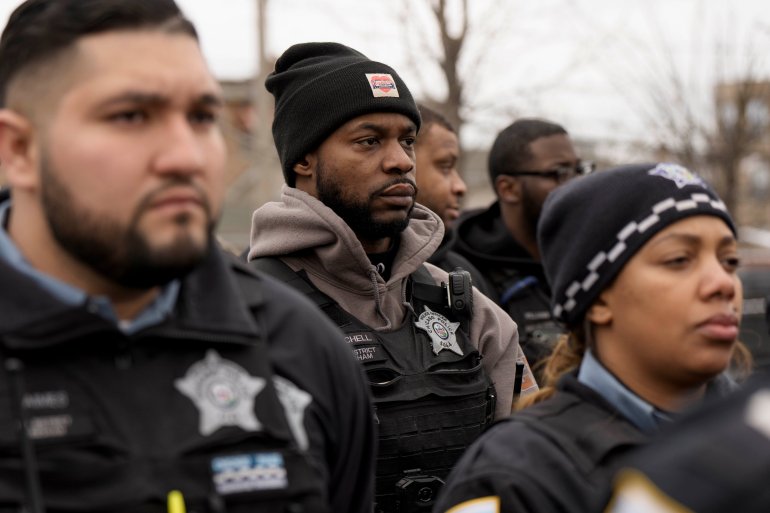
Former Riverside, IL police chief Tom Weitzel penned a piece on police overtime. He would know. He saw this process in real time back when he was chief.
He said to share this publicly from his Memo blog over at Substack.
Here’s the link for the piece. It’s a very good read. Emphasis is original.
Let’s stop pretending we don’t know what’s happening. Illinois politicians are lying to the public about police overtime. Not shading the truth. Not “miscommunicating.” Lying — plainly, repeatedly, and with full awareness of what they’re doing.
Every budget season, the performance begins. The camera rolls. Officials step to podiums with furrowed brows and dramatic warnings about “out of control” police overtime. They issue statements dripping with indignation. They leak selective numbers to reporters who print them without context. And the public is told, once again, that police departments are blowing through taxpayer dollars.
But behind closed doors, the script flips. The same officials who wag their fingers in public are praising police chiefs in private. Mayors, village presidents, city managers, and budget directors all deliver the same message: You’re doing a great job. Keep doing exactly what you’re doing. This is how we want it managed.
Why the double life? Because overtime is the cheapest lie in the Illinois government.
Hiring a new police officer in this state costs around $160,000 in the first year alone. That’s not a union slogan. It’s the real cost of doing business: salary, academy tuition, field training, uniforms, firearms, radios, healthcare, family healthcare, pension contributions, workers’ compensation exposure, and administrative overhead. Those costs don’t disappear after year one. They lasted decades.
Overtime doesn’t.
Overtime doesn’t add pension liability. It doesn’t increase headcount. It doesn’t create a long-term financial obligation. It can be dialed up or down at will. It can be blamed on someone else. It can be weaponized in an election year. It is the perfect political tool: visible enough to complain about, invisible enough to manipulate.
That’s why Illinois operates on overtime.
Let’s talk about the math every elected official already knows. One hundred officers working heavy overtime — about 400 hours a year at roughly $60 an hour — costs $2.4 million. Hiring 100 new officers to do the same work costs roughly $16 million in year one, and tens of millions more over the course of their careers. No mayor, no city manager, no budget director is unaware of this. They understand it perfectly.
When politicians step in front of microphones and act shocked at overtime spending, they’re not confused. They’re not misinformed. They’re not victims of poor communication. They’re lying. They’re counting on the public not to notice.
The most dishonest part comes next. After approving hiring freezes, after allowing staffing levels to collapse, after watching retirements outpace recruitment year after year, those same officials turn around and publicly scold police chiefs for overtime numbers they themselves engineered. It is political theater, with police officers as props.
Overtime was never designed to be a staffing model. It was meant for emergencies, court appearances, critical incidents, and temporary surges in demand. In Illinois, it has become a permanent fixture because politicians refuse to do the one thing that would actually fix the problem: hire enough cops.
There is a human cost to this charade. One that rarely makes the press releases. Officers are exhausted. They’re working double shifts. They’re missing holidays, birthdays, anniversaries, and funerals. Fatigue builds up, and when mistakes inevitably happen, the same officials who demanded overtime rush to the microphones to ask why leadership “failed.”
That’s not leadership. That’s negligence.
You cannot demand endless overtime and then act surprised when officers are worn down. You cannot starve departments of staffing and then blame chiefs for the math you approved in closed session meetings. You cannot keep lying to taxpayers while pretending you’re being “tough” on police budgets.
If Illinois politicians truly wanted to reduce overtime, they would hire more officers. They don’t. Because overtime isn’t the problem — honesty is.
The data proves it.
In Chicago, the police overtime bill reached $273.8 million in 2024, more than two-and-a-half times what was budgeted — even as city leaders publicly promised to rein in costs… In the first half of 2025 alone, CPD had already spent nearly $119.7 million on police overtime — almost 20 percent more than its entire annual overtime budget…
In Joliet, city records show roughly $27,000 per day in overtime costs — about $10 million per year — prompting city leaders to call for staffing studies to understand why regular staffing hasn’t kept pace…
In the village of Moweaqua, the police department exceeded its overtime budget by nearly 70 percent in the 2024–25 fiscal year, forcing unplanned adjustments to the general fund to keep the books balanced…
In Tinley Park, an independent payroll audit revealed persistent overtime and comp-time usage, with roughly $15 million paid in police overtime over the past decade and about $2 million in a single recent year — far above comparable communities…
These are not random outliers. They are structural patterns that are consistent across communities in Illinois, from the largest city in the Midwest to small villages.
So here’s the challenge for every elected official in this state: Stop lying to the public. Stop pretending overtime is accidental. Stop using police officers to mask your unwillingness to make hard, expensive, long-term decisions.
Illinois doesn’t have a police overtime crisis. It has a political cowardice crisis. And every elected official knows it.
“Political cowardice”, thy name is “democRATiKKK party”, especially so in the people’s soviet-socialist refuge of ILL-ANNOY!
SAVE AMERICA, PASS THE “SAVE” act to require American citizenship to vote in America, police voter rolls to eliminate the dead and those moved out of precincts!
“They’re counting on the public not to notice.”
And police staffing is not the only item on their agenda that they’re counting on you not to notice.